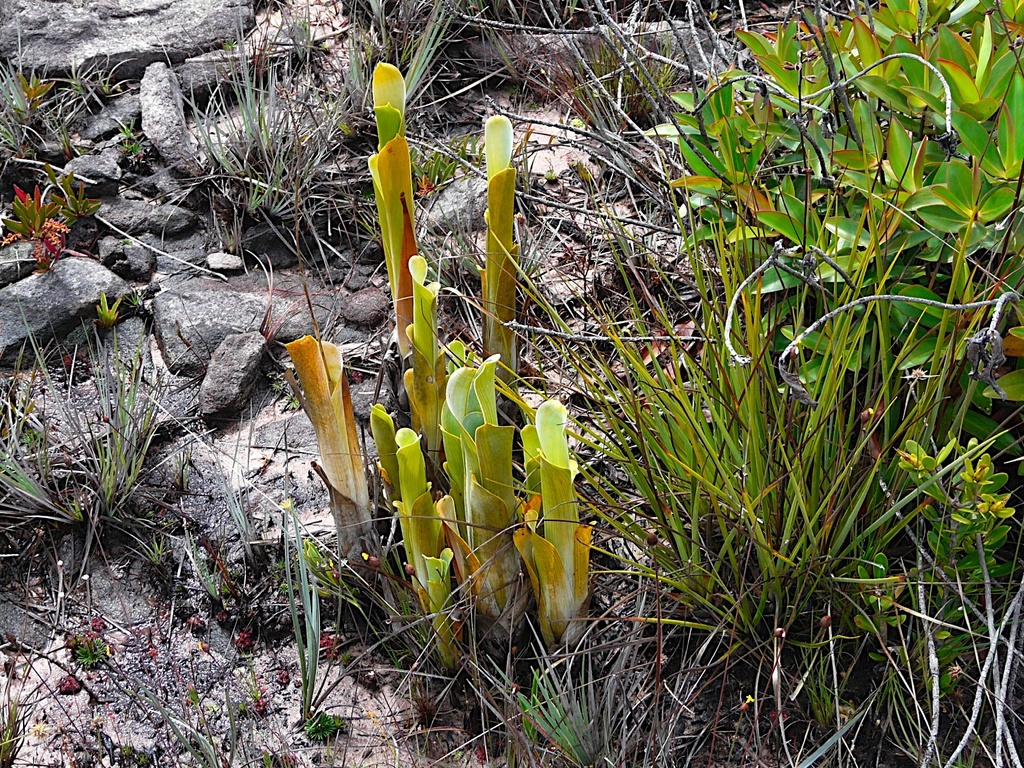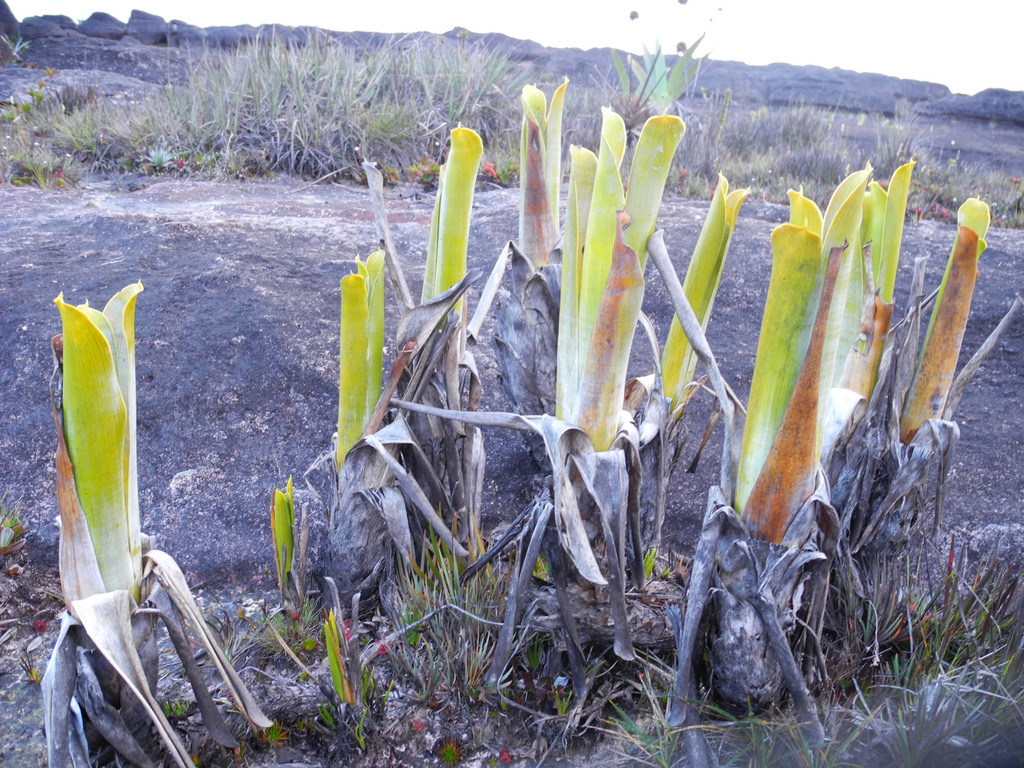
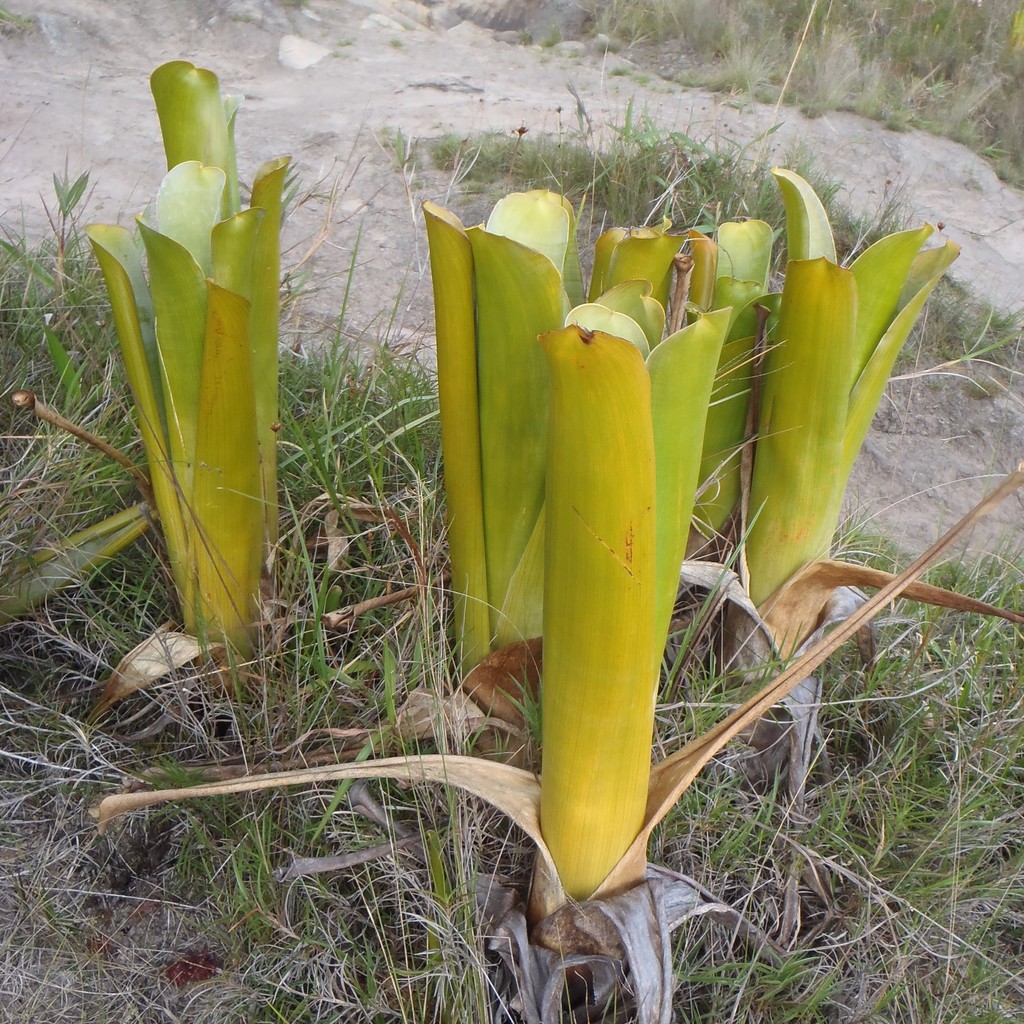
Description
Brocchinia reducta is one of the few known carnivorous bromeliads, and a fascinating botanical rarity. Its leaves form a closed tubular rosette that collects rainwater and secretions. The inner walls are covered with slippery waxy scales that prevent the escape of insects that fall in, attracted by the shine and sweet scent the plant emits. It grows on the summit of Venezuelan tepuis alongside Heliamphora, in extremely nutrient-poor soils where carnivory is a decisive evolutionary advantage.
Specific care
Very difficult to find and grow outside its habitat. It needs constant high humidity, intense light and temperature with a notable difference between day and night. The rosette center must always be kept filled with distilled water. The substrate must be very mineral and well-drained. It is more heat-tolerant than Heliamphora but equally demanding in humidity. Best grown in a climate-controlled terrarium.
Brocchinia reducta is not a "classic" carnivorous plant in the sense of having its own digestive glands: it relies on symbiotic bacteria to decompose its prey. Its carnivory is so primitive that some botanists debate whether to classify it as a proto-carnivorous plant.
Gallery